Communist Albania: Enver Hoxha, Isolation and the Bunker Legacy
From 1944 to 1990, the Communist Party ruled Albania under Enver Hoxha, abolishing private property and opposition while breaking with Yugoslavia, the USSR and China.
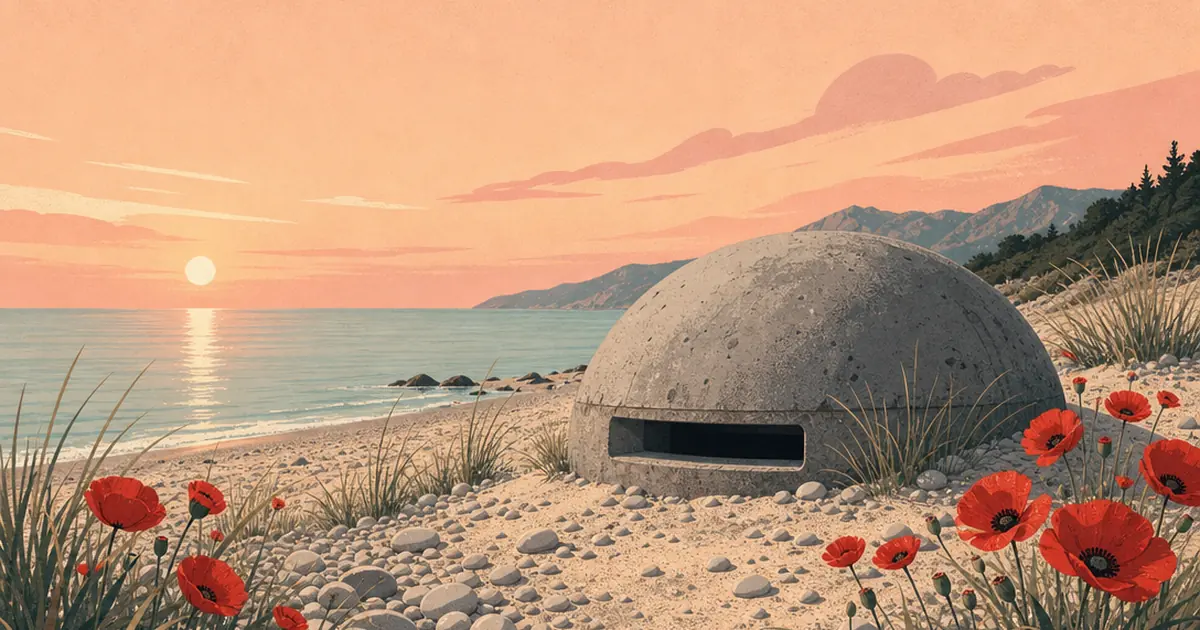
From 1944 to 1990, communist Albania was ruled by the Communist Party, and for almost all of that time its leader was Enver Hoxha. The regime abolished private property and political opposition, fought illiteracy and built up heavy industry. Along the way Albania broke in turn with Yugoslavia, the USSR and China, and by the 1980s it had become one of the most closed countries in the world.
This is the seventh chapter of our guide to the history of Albania. It covers the period from the elections of 1945 to the crisis of the late 1980s, and also looks at Kosovo as part of Yugoslavia.
How communist Albania came into being
The communists already held power after liberation, and in 1945–1946 they made it official. The elections of 2 December 1945 offered voters a single list. On 11 January 1946 the People's Republic of Albania was proclaimed, and on 14 March a constitution modelled on the Yugoslav and Soviet ones was adopted.
The USSR, its allies and France recognised Enver Hoxha's government straight away. The USA and Britain made recognition conditional on the elections. Only Democratic Front candidates appeared on the ballot, and according to official figures the Front won about 93% of the vote. The newly elected assembly then abolished the monarchy.
Power was concentrated in the hands of one man. In 1946 Enver Hoxha was simultaneously prime minister, foreign minister, defence minister and commander-in-chief. He remained prime minister from October 1944 to July 1954, after which Mehmet Shehu headed the government. The Communist Party, founded on 8 November 1941, was renamed the Party of Labour of Albania (PLA) in 1948.
The new economy. State ownership and a single central plan were declared the foundation of the state. The regime introduced an extraordinary tax on war profits, which hit the big merchants hard. The agrarian reform (a 1945 law, carried out mainly in 1946) took land from large landowners and religious institutions without compensation. In 1946 all industry was nationalised, foreign trade became a state monopoly, and the buying and selling of land was banned. The country was rebuilt largely through voluntary labour, with important aid from the relief agency UNRRA. Albania took part in the Paris Peace Conference in July 1946, though not on an equal footing with the other countries, and was awarded 5 million dollars in reparations from Italy.
Crushing the opposition
The regime wiped out the opposition within its first few years. Balli Kombëtar activists were persecuted as "collaborators", thousands of opponents were put on trial as "war criminals", and armed uprisings in the north were put down.
In September 1946 an uprising broke out in Postriba near Shkodër, and another in Koplik. Their suppression was followed by executions, arrests and internment. In September 1947 Tirana staged the trial of the "group of deputies": 24 people stood trial, and 16 were sentenced to death. In 1949 émigrés set up the National Committee for a Free Albania, but the regime had the country firmly under control and these efforts came to nothing. Even criticism within the party was not tolerated. At the Tirana Conference of 1956, inspired by the 20th Congress of the Soviet Communist Party, some delegates criticised the party line, and they were punished for it.
Alliances and breaks
Communist Albania's foreign policy was a string of alliances, each of which ended in a break. Yugoslavia came first as the main ally, followed by the USSR and then China. After 1978 the country stood alone.
| Years | Main ally | How it ended |
|---|---|---|
| 1944–1948 | Yugoslavia | Break after Yugoslavia's expulsion from the Cominform |
| 1948–1961 | USSR | The USSR stopped aid and broke off relations |
| 1961–1978 | China | China stopped aid |
| after 1978 | none | Isolation |
Yugoslavia. In November 1946 Albania signed an economic convention with Belgrade providing for coordinated plans, a customs union and a common currency. In June 1948, however, Yugoslavia was expelled from the Cominform. Tirana tore up the agreements and turned to the USSR. Yugoslavia's chief supporter in Albania, Interior Minister Koçi Xoxe, was removed in 1948 and executed in 1949 after a closed trial.
The USSR. In February 1949 Albania joined Comecon. In 1955 it became one of the founding members of the Warsaw Pact and joined the UN in the same year. The first five-year plan of 1951 was drawn up with Soviet help. In November 1960, at the meeting of 81 communist parties in Moscow, Hoxha openly criticised Khrushchev. In 1961 the USSR stopped its aid and recalled its specialists, and in December it broke off diplomatic relations. After the invasion of Czechoslovakia in August 1968, Albania left the Warsaw Pact in September.
China became the main ally after the break with Moscow. In 1978, however, it stopped its aid, and the alliance collapsed.
Relations with the West were poor from the outset. In 1946 British ships struck mines in the Corfu Channel. The case went to the International Court of Justice, and Albanian gold ended up frozen. When London later offered to restore relations, Tirana insisted on the return of the gold as a condition. Relations with West Germany were never established because Albania demanded reparations, whereas France upgraded its mission to an embassy. Only in the late 1980s did Tirana begin to signal that it was ready for relations with the USA, the USSR and the European Common Market, and for joining the Helsinki process.
The socialist economy
The regime built an economy without private property or foreign money. It rested on state ownership and heavy industry, and the country was meant to develop by "relying on its own forces".
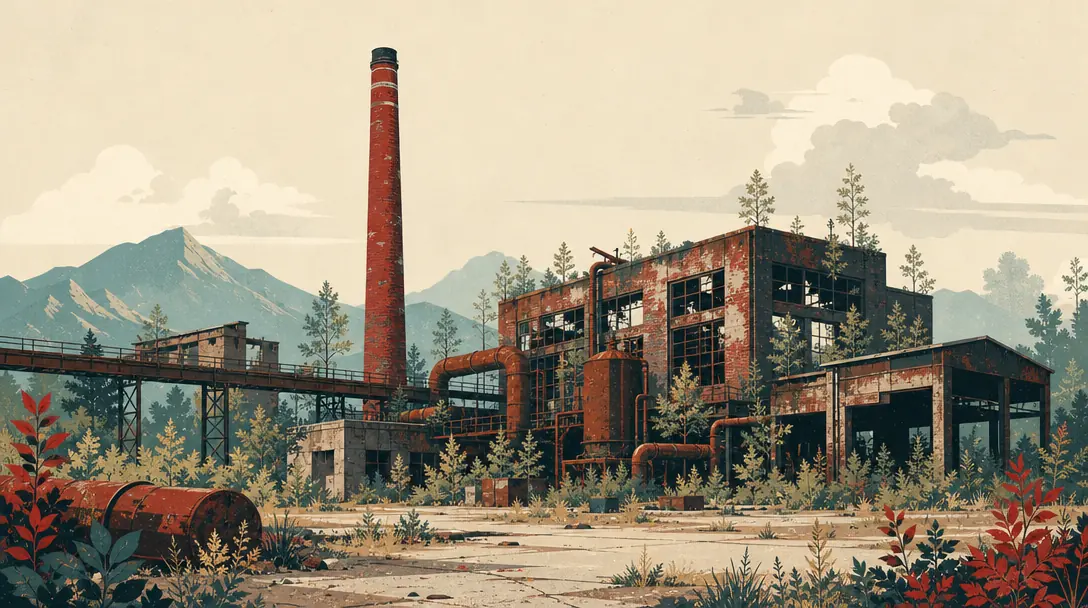
The first five-year plan, launched in 1951, focused on heavy industry and natural resources. Collectivisation of agriculture was the slowest process of all: it reached the mountain areas by the late 1960s and was completed in 1967. The constitution of the 1970s explicitly banned foreign investment and loans.
By the 1980s the economy had reached a dead end. Families received basic foods such as meat, sugar and oil on ration coupons. The regime confined itself to cosmetic measures: a "New Economic Mechanism" and rationed supplies. Peasants' private livestock was also absorbed into collective herds.
Repression and control over everyday life
The regime relied above all on the Sigurimi secret police. The party stood above the law and human rights, and "class struggle" was treated as the driving force of society. Propaganda portrayed Albania as the only "truly socialist" country, surrounded by a hostile "encirclement".
The families of political prisoners and of "hostile classes" were interned or sent to state farms. The internment camp at Tepelena (1949–1954) held mostly such families, including many children, and several hundred people are estimated to have died there. In 1968 the Spaç prison and forced-labour camp opened at the copper and pyrite mines, and in May 1973 its prisoners rose in revolt.
Atheism. Following a speech by Hoxha in February 1967, all religious institutions were closed and Albania declared itself the world's first atheist state.
Control reached into every area of life:
in 1966, following the example of China's Cultural Revolution, military ranks were abolished and party commissars were introduced in the army;
people of working age had to attend periodic military training, known as zbor (military training call-up);
"workers' control" gave groups of workers oversight of the administration, officially to combat bureaucracy;
jamming aerials, called zhurmues ("noisemakers"), made it hard to watch foreign television;
the official ideal was the "new socialist man", shielded from "alien bourgeois manifestations".
The most visible legacy of the era is some 173,000 concrete bunkers, built in the 1970s and 1980s in case of an attack from abroad. Many of them are still standing.
Schools, science and culture
After the war, the biggest problem in education was illiteracy: according to the textbook, about 80% of the population could not read. The regime organised mass literacy courses, made schooling compulsory, and opened the country's first university and the Academy of Sciences.
The education reform law of August 1946 made schooling secular, state-run and uniform, and introduced seven years of compulsory education. The reform of the 1960s emphasised the class character of the school and introduced an "ideological axis" of study, productive labour and military training. In 1957 the State University of Tirana opened as Albania's first university, and in 1972 the Academy of Sciences began its work.
From 1945, when the Writers' Union was founded, literature and the arts had to follow "socialist realism" under censorship, and modernists were punished. The 1960s brought the first major scientific achievements, including work on a unified standard Albanian language. Healthcare was free. Fighting tuberculosis and malaria was an urgent priority, which included draining the marshes.
The crisis of the regime
In the 1970s and 1980s the regime turned ever more inward and hunted for enemies at home. A new constitution, finally adopted in December 1976, renamed the country the People's Socialist Republic of Albania and enshrined the leading role of the party in law.
On 17 December 1981 Prime Minister Mehmet Shehu was found dead at his home. The official version was suicide, and he was posthumously branded an "enemy" and the leader of a "hostile group". Other leaders soon fell as well, Kadri Hazbiu among them.
Enver Hoxha, born on 16 October 1908 in Gjirokastër, died on 11 April 1985 in Tirana. On 13 April Ramiz Alia, who had chaired the Presidium of the People's Assembly since 1982, was elected First Secretary of the PLA. He stuck to a "course of continuity", but the crisis only deepened. From 2 July 1990 about 4,800 Albanians took refuge in foreign embassies in Tirana, and a few days later they were allowed to leave the country.
Kosovo as part of Yugoslavia (1945–1989)
After the war Kosovo remained part of Yugoslavia as an autonomous region within Serbia, and Albanians were treated as a national minority. Kosovo's path from military administration in 1945 to broad autonomy in 1974 and its abolition in 1989 is a separate exam topic.
In 1945 Kosovo was placed under military administration. The period brought terror against Albanians, a campaign to confiscate weapons, and the massacre in Bar in spring 1945. After 1950 many Albanians were pressured into emigrating to Turkey. The secret organisations "National Democratic" and "Besa Kombëtare" opposed Serbian policy, and the main instrument of persecution was the Yugoslav state security service, the UDB.
Key dates:
27 November 1968: demonstrations in Prishtina and other towns demanding republic status and a university; the University of Prishtina opened in the 1969–1970 academic year.
February 1974: the constitution of the autonomous province and the new Yugoslav constitution give Kosovo broad autonomy, with equal status for language, culture, flag and symbols.
1979: income per head in Kosovo is a quarter of the Yugoslav average, and unemployment is 2.5 times higher.
11 March 1981: student demonstrations in Prishtina under the slogan "Kosovo a republic"; on 2 April a state of emergency is declared, thousands are arrested, and purges of Albanians from the administration and schools begin.
February 1989: the Trepça miners' hunger strike against the curtailing of autonomy.
March 1989: under pressure from Serbia, led by Milošević, the Kosovo Assembly abolishes the province's autonomy.
23 December 1989: the Democratic League of Kosovo is founded in Prishtina, led by Ibrahim Rugova.
Next: Democratic Albania and Kosovo. Previous: Albania in the Second World War.
Frequently asked questions
Who ruled communist Albania?
For almost the entire period it was Enver Hoxha, who led the Communist Party (from 1948 the Party of Labour of Albania) from its founding until his death on 11 April 1985. He was prime minister until 1954, after which Mehmet Shehu headed the government. After Hoxha's death, Ramiz Alia took over the party.
Which countries were communist Albania's allies?
It allied with three countries in turn: Yugoslavia (1944–1948), the USSR (1948–1961) and China (1961–1978). Each alliance ended in a break. After 1978 Albania was left isolated.
Is it true that religion was banned in Albania?
Yes. Following Enver Hoxha's speech in February 1967, all religious institutions were closed and Albania declared itself the world's first atheist state. Freedom of religion returned only with the fall of the regime.
Why are there so many bunkers in Albania?
The regime built them in the 1970s and 1980s as part of its policy of defence against "encirclement" by the West and its former allies. Some 173,000 concrete bunkers were built in total, and many of them survive to this day.
When did Albania's first university open?
The State University of Tirana opened in 1957. In 1972 the Academy of Sciences of Albania began its work in Tirana.