Albania After Communism: From 1990 Protests to NATO and Kosovo
Student protests in December 1990 ended one-party rule in Albania. Here is how the country survived the 1997 crisis, joined NATO and watched Kosovo become independent.


Contents7 sections
- The fall of the communist regime (1990–1991)
- The first elections
- Albania after communism: the move to a market economy (1992–1996)
- The crisis of 1997
- The 1998 constitution and changes of government
- The road to NATO and the European Union
- Kosovo: from autonomy to independence
- Peaceful resistance in the 1990s
- The war of 1998–1999
- UN administration and independence
- FAQ
The story of Albania after communism begins in December 1990, when student protests forced the authorities to allow other political parties. The shift to democracy and a market economy was difficult and included the crisis of 1997. The country then turned towards the West, joining NATO in 2009 and becoming an EU candidate in 2014. Over the same period, Kosovo went from losing its autonomy to declaring independence on 17 February 2008.
This is the eighth and final chapter of our guide to the history of Albania. It covers the years from 1990 to the present day.
The fall of the communist regime (1990–1991)
The one-party regime collapsed within a few months. On 8 December 1990, students at the Student City in Tirana took to the streets to demand political pluralism. On 11 December the ruling party allowed other parties to form, and on 12 December the first opposition party appeared: the Democratic Party.
The authorities had tried to stay in power through reform. In the summer of 1990, Ramiz Alia removed some of the old leadership, issued passports to people who had taken refuge in foreign embassies and promised to review the constitutional order. None of it was enough.
Over the winter, events gathered pace. In February 1991, students and lecturers went on hunger strike, demanding that the dictator's name be dropped from the name of the University of Tirana. Alia gave in, dismissed Prime Minister Adil Çarçani and appointed Fatos Nano in his place. On 20 February 1991, protesters pulled down the statue of Enver Hoxha in Tirana's Skanderbeg Square.
The first elections
Albania held its first multi-party elections on 31 March 1991. Of the 250 seats, the Party of Labour won 169 and the Democratic Party 75. In April, the law on the main constitutional provisions renamed the state the Republic of Albania, and on 30 April Ramiz Alia was elected president.
The country was still in turmoil. After a general strike, Fatos Nano's government resigned on 4 June 1991 and was replaced by a "Government of Stability" under Ylli Bufi. On 13 June, the Party of Labour of Albania was dissolved and re-founded as the Socialist Party of Albania.
Albania after communism: the move to a market economy (1992–1996)
The Democrats won the elections of 22 March 1992, taking 92 of the 140 seats to the Socialists' 38. Aleksandër Meksi became prime minister. Ramiz Alia resigned on 3 April, and on 9 April parliament elected Sali Berisha as president.
The new government pushed market reforms further. It freed prices and privatised housing and small businesses. The break-up of agricultural land had already begun under the Law "On Land" of July 1991. In the months right after the fall of communism, the country relied on emergency aid, mainly from Italy through Operation Pelican. Ties with Western institutions began in 1991 with agreements with the IMF, the World Bank and the European Bank for Reconstruction and Development.
Politics remained tense. A draft constitution was rejected in a referendum on 6 November 1994. The elections of 26 May 1996 were marred by irregularities, and the opposition disputed the results and boycotted parliament.
The crisis of 1997
In 1997, Albania came close to civil war after the collapse of pyramid schemes into which a great many families had put their savings. Order returned thanks to a compromise between the parties and Operation Alba, an international mission led by Italy.
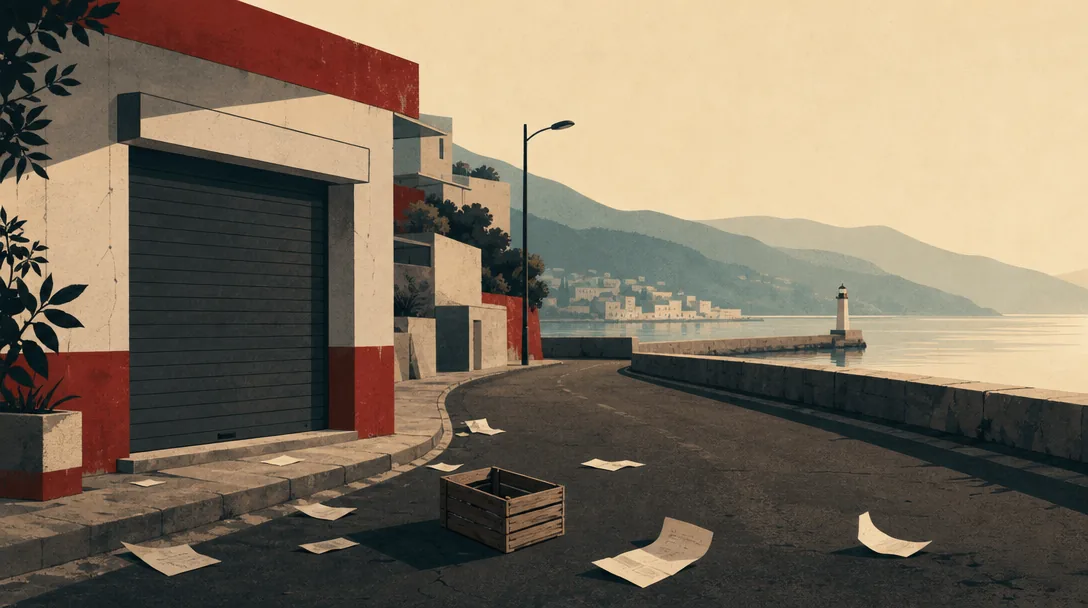
The first protests broke out in January 1997 in the south, and Vlorë became one of the main centres of unrest. On 9 March, with the OSCE mediating, the parties reached an agreement: they formed a coalition Government of National Reconciliation under Bashkim Fino and called early elections.
Operation Alba ran from April to August. It was a multinational force of about 7,000 troops under Italian command, operating under a UN mandate (Resolution 1101). In the early elections of 29 June 1997, the Socialists won around two thirds of the seats in parliament, and a referendum held the same day rejected a return of the monarchy.
The 1998 constitution and changes of government
Albania's current constitution was approved in a referendum on 22 November 1998 and proclaimed on 28 November. It made the country a parliamentary republic, with a single-chamber parliament of 140 members elected for four years, and a president elected by parliament for five.
In September 1998, the Democratic MP Azem Hajdari was murdered, raising tensions even further. From then on, power changed hands through the ballot box: the Socialists won a second term in 2001, the Democrats returned in 2005, and the Socialists came back in 2013.
The road to NATO and the European Union
Joining Euro-Atlantic structures became democratic Albania's main foreign-policy goal. The country moved from its first agreements in 1991 to NATO membership in 2009 and EU candidate status in 2014.
| When | Step |
|---|---|
| June 1991 | Joined the CSCE (now the OSCE) |
| 1992 | North Atlantic Cooperation Council |
| 23 February 1994 | NATO Partnership for Peace programme and application for membership |
| 13 July 1995 | Membership of the Council of Europe |
| 12 June 2006 | Stabilisation and Association Agreement with the EU (in force from 1 April 2009) |
| 3 April 2008 | Invitation to NATO at the Bucharest summit |
| April 2009 | NATO membership together with Croatia; application for EU membership |
| 15 December 2010 | Visa-free travel to the Schengen Area |
| June 2014 | EU candidate status |
The reforms needed for a NATO invitation picked up speed after US President George W. Bush visited in June 2007. Albania joined the alliance in the year of its 60th anniversary. On the EU side, the decisive step was the 2016 judicial reform: in November 2016 the European Commission recommended opening negotiations, provided the vetting of judges made progress. Albania is currently negotiating its accession to the European Union.
Kosovo: from autonomy to independence
After Kosovo lost its autonomy in 1989, its Albanians went from peaceful resistance and a parallel state, through the war of 1998–1999, to UN administration and finally the declaration of independence on 17 February 2008.
Peaceful resistance in the 1990s
On 2 July 1990, delegates of the Assembly of Kosovo adopted the Constitutional Declaration of Kosovo as an equal unit within Yugoslavia. On 7 September, meeting in secret in Kaçanik, they adopted the Constitution of Kosovo and proclaimed it a republic. A referendum on independence followed in September 1991, though Serbia and Yugoslavia did not recognise it. In parallel elections in May 1992, Ibrahim Rugova was elected president of the Republic of Kosovo.
Under Rugova, Kosovo Albanians practised peaceful, passive resistance and built parallel, unofficial institutions, including schooling in Albanian. These were funded by a government in exile under Bujar Bukoshi, which collected contributions from the diaspora. Rugova's only agreement with Milošević, on Albanian-language education, was signed in September 1996 but stayed on paper.
The war of 1998–1999
The Kosovo War began in February 1998, with the Kosovo Liberation Army (KLA, UÇK) among the fighting forces. On 7 March 1998, during a Serbian attack on Prekaz, KLA co-founder Adem Jashari was killed along with most of his family. In early 1999, Serbian forces carried out mass killings of civilians, in Reçak and Rugova among other places, and this pushed the international community to step in.
At the Rambouillet conference in March 1999, the Albanian side accepted the proposed agreement and the Yugoslav side rejected it. From 24 March to 10 June 1999, NATO carried out 78 days of air strikes on Serbian military targets. More than 10,000 Albanians were killed or went missing during the war, and more than 850,000 became refugees.
UN administration and independence
Under the Kumanovo Agreement of 9 June 1999, Serbian forces withdrew. On 10 June, UN Security Council Resolution 1244 set up the UNMIK mission, and on 12 June NATO troops (KFOR) entered Kosovo. On 4 March 2002, Ibrahim Rugova was elected president within the provisional institutions under UN administration.
On 17 February 2008, the Assembly of Kosovo declared independence, with 109 of its 120 members voting in favour. The move followed the plan drawn up by UN Special Envoy Martti Ahtisaari. Fatmir Sejdiu was president at the time and Hashim Thaçi prime minister. The Constitution of the Republic of Kosovo came into force on 15 June 2008. On 22 July 2010, the UN International Court of Justice found in an advisory opinion, by 10 votes to 4, that the declaration did not violate international law.
Previous chapter: Communist Albania.
Frequently asked questions
When did communism fall in Albania?
The turning point came in December 1990. Student protests began on 8 December, the authorities allowed political pluralism on 11 December, and the Democratic Party was founded on 12 December. The first multi-party elections were held on 31 March 1991, and in 1992 the opposition came to power.
What happened in Albania in 1997?
Pyramid schemes into which many families had put their savings collapsed. Protests and unrest broke out, especially in the south and in Vlorë, and the country came close to civil war. Order was restored by Bashkim Fino's coalition government, early elections and the Italian-led Operation Alba.
When did Albania join NATO?
In April 2009, together with Croatia. Albania was invited to join at the Bucharest summit on 3 April 2008. It had first applied for membership in 1994, when it joined the Partnership for Peace programme.
Is Albania in the European Union?
No, it is still a candidate country. Albania applied for membership in April 2009, became a candidate in June 2014 and is currently negotiating accession. Since 15 December 2010, Albanian citizens have been able to travel to the Schengen Area without a visa.
When did Kosovo declare independence?
On 17 February 2008, when 109 of the 120 members of the Assembly of Kosovo voted for the declaration. In 2010, the UN International Court of Justice concluded that the declaration did not violate international law.