Albanian Currency: The Lek, Exchange Rates and Paying in Albania
Albania's currency is the Albanian lek (ALL). Here's how it compares with the euro and dollar, what the notes look like, and how to pay for things on your trip.

Contents7 sections
- What is the Albanian currency? The lek (ALL)
- Where the name "lek" comes from
- Albanian lek to euro and dollar: today's rate
- Albanian lek banknotes and coins
- Old lek: why a price may sound ten times too high
- Cash, cards or euros: money in Albania
- Which currency to bring
- Where to change money
- ATMs and cards
- Paying in euros
- Money in Albanian: phrases for the till, the café and the exchange office
- How to say an amount
- Phrases for paying
- At the exchange office and the ATM
- FAQ
What is the Albanian currency? The lek (ALL)
Albania's currency is the Albanian lek, international code ALL. In Albanian the singular is lek and the plural is lekë, and both sound the same: "lek". Next door in Kosovo, people pay in euros.
Why does lekë sound just like lek? In everyday speech a final ë is usually silent or barely pronounced, a little like the silent e at the end of English "name".
Price tags show the lek in several ways. The official symbol is L, but next to the figure you may also see Lek, lekë or the banking code ALL. If your card statement shows ALL and you're wondering what currency that is, it's the lek. Cafés often leave the currency off altogether. A chalkboard saying "Kafe 100" needs no explanation, because everyone knows it means lek. The numeric ISO 4217 code is 008, though only accountants are likely to need it.
On paper, the lek is divided into 100 qindarka (qindarkë, from qind, "hundred"). In practice you will never see one. No coins of that value are minted, and prices are rounded to the nearest whole lek. Money is issued by the Bank of Albania, Banka e Shqipërisë.
The neighbours have their own money. Montenegro, Kosovo and Greece use the euro, and North Macedonia uses the denar. The lek is used only within Albania.
Where the name "lek" comes from
The most widely accepted explanation is that lek comes from the name of Alexander the Great, known in Albanian as Leka i Madh (Leka the Great). Another theory links it to Lekë Dukagjini. The name was chosen in 1926, when the country got its own monetary unit.
In speech the word changes like any other Albanian noun. Leku means "the lek", with the definite article attached, and lekët is the definite plural. That's why signs and receipts look so varied, even though there is only one currency.
Albanian lek to euro and dollar: today's rate
The lek's exchange rate against the euro and the US dollar changes every day, so we don't print figures in this article. The live widget below shows current rates and includes a converter that updates automatically. Treat it as your only reference.
You can type any amount into the converter: 1,000 lek, 5,000 lek or the price of a dinner from a menu. It shows what that comes to in euros, dollars and other currencies at today's rate.
Why you see different numbers. The Bank of Albania publishes an official rate, which is used for statistics and contracts. Exchange offices and ATMs set their own rates. An exchange office makes its money on the gap between its buying and selling prices. An ATM adds a fee and sometimes an unfavourable conversion. The difference from the official rate is usually small, but on larger sums you'll notice it.
If you're coming from the US or the UK, the usual approach is simple: bring euros or dollars, or use your card, and get lek once you arrive.
Planning your budget in euros is easiest. In recent years the lek has stayed fairly steady against the euro. Albania's economy is closely tied to the eurozone, many tourists come from elsewhere in Europe, and Albanians working in Italy and Greece send money home. That's why tourists and locals alike in resort areas tend to think about prices in euros.
Albanian lek banknotes and coins
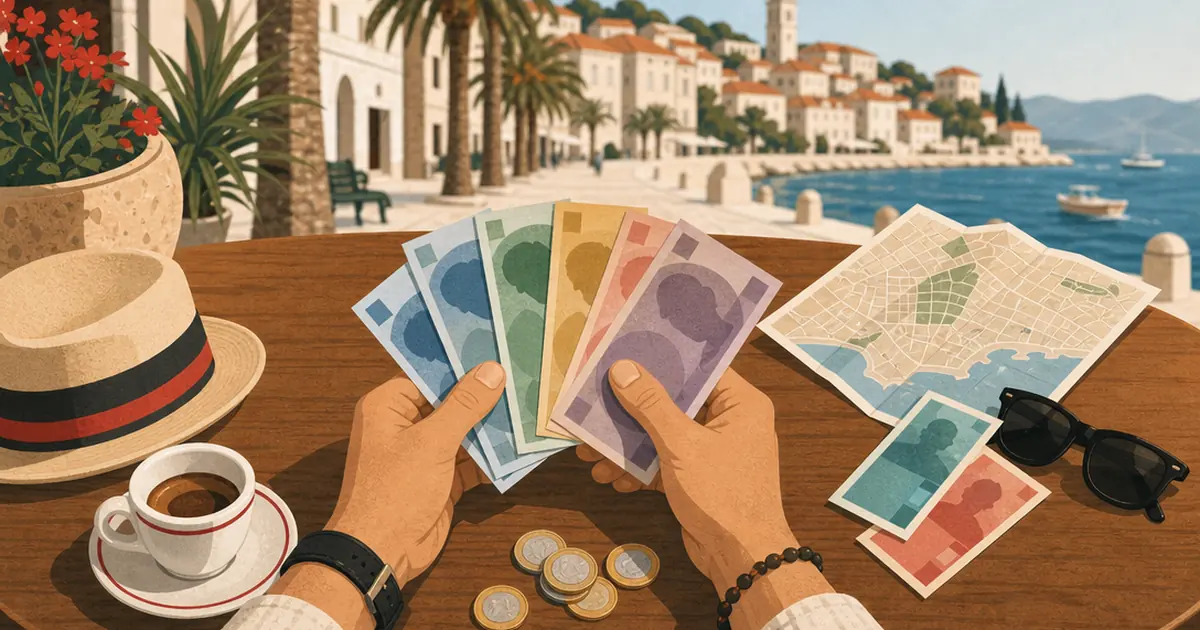
Banknotes range from 200 to 10,000 lek, and coins from 1 to 100 lek. Each note carries a portrait of a figure from Albanian history or culture, so you can tell the value at a glance even before the numbers feel familiar.
| Value | Portrait | Handy for |
|---|---|---|
| 200 | poet Naim Frashëri | coffee, byrek (savoury pastry), the bus |
| 500 | Ismail Qemali, who proclaimed independence | a taxi, lunch at a café |
| 1,000 | writer Pjetër Bogdani | groceries, beach sunbeds |
| 2,000 | Illyrian king Gentius | a restaurant, the pharmacy |
| 5,000 | Skanderbeg | a hotel, car hire |
| 10,000 | poet Asdreni, who wrote the words of the national anthem | large purchases, exchange |
Two series are in circulation side by side. The Bank of Albania introduced the new one gradually between 2019 and 2022. The older notes are still legal tender, and you'll often get them in your change. The 10,000 lek note exists only in the new series, as the old one had no note of that value. The new 200 lek note is printed on polymer, so it feels smooth and is slightly see-through. As of January 2024, only the 1992–1996 issues had been withdrawn, and no withdrawal of later notes had been announced.
Coins are simpler. The 5, 10, 20, 50 and 100 lek coins are in everyday use, and the 100 is easy to spot because it's bimetallic. A 1 lek coin technically exists, but it turns up so rarely that you can forget about it.
Large notes can be a problem. Hand over a 5,000 at a café by the bus station at eight in the morning and the barista will probably just shrug. Markets and taxis are no different. Exchange offices and ATMs tend to give you exactly these big notes, so break your first one at a supermarket.
Old lek: why a price may sound ten times too high
In 1965 the lek was redenominated at 10:1, yet many Albanians, especially older people, still quote prices in old lek. If a coffee costs 100 and you hear një mijë (a thousand), nobody is cheating you. They are simply counting the old way.
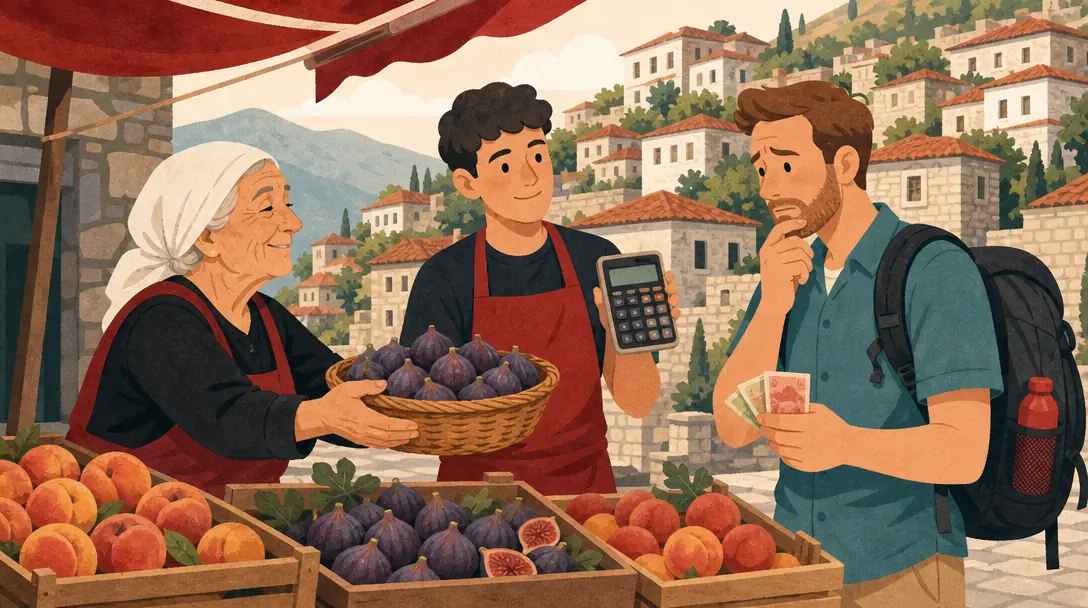
The habit has lasted for decades. Children grew up hearing prices with an extra zero at home and at the bazaar, and now they talk that way themselves. The further you get from Tirana and the tourist streets, the more often you'll hear it.
Where it happens. An older woman at the market in Berat asks for "dy mijë" for a bag of figs and means 200 lek. A landlady quotes the electricity bill this way. So might a taxi driver without a meter, or someone renting out scooters by the day. Old lek can crop up wherever a price is said out loud. Shop price tags, menus and receipts always use new lek. Younger sellers in Tirana or Saranda usually count in new lek too, but it does no harm to check.
If you didn't catch the amount, ask to see it on a phone or calculator. Sellers are used to this and will type in the figure in new lek themselves. You can also photograph a confusing price tag or sign and translate it from Albanian with audio, so you hear how the amount sounds as well.
Occasionally the old count is used against tourists. The seller states the price the old way, the confused visitor hands over ten times as much in new lek, and the money is quietly pocketed. The defence is simple: confirm before paying, and glance at the price tags on the next stall.
Cash, cards or euros: money in Albania
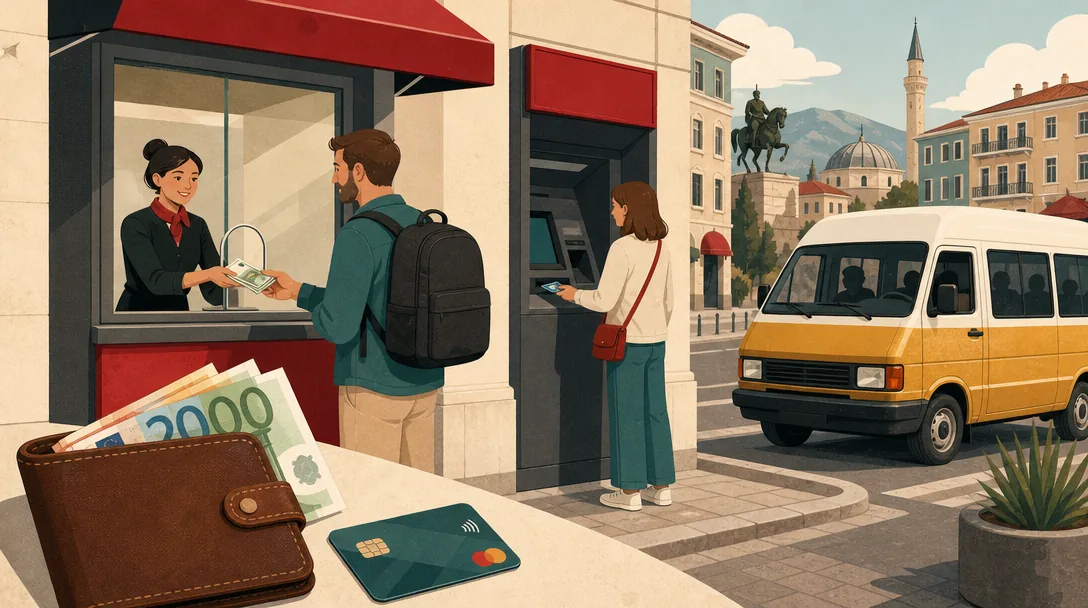
For most visitors, cash is the safest bet. Bring euros or dollars and change them at street exchange offices, signposted këmbim valutor (currency exchange). An international card works at ATMs and in larger shops, but markets, buses and small cafés usually take cash only.
Which currency to bring
Euros are the most convenient. Every exchange office takes them, and you can sometimes pay with them directly. US dollars are accepted too, though not at every exchange office and at a slightly worse rate.
Pack a Visa or Mastercard as a backup, ideally with a second card from a different bank. Even so, most of what you spend in Albania will be in cash.
Where to change money
Private exchange offices on city streets give the best rates. They usually charge no commission, and the gap between buying and selling is small. The board shows two columns: blerje (buying) and shitje (selling). The closer the two figures, the fairer the office.
Banks offer worse rates and ask for your passport. The airport has the widest gap between buying and selling, so change only enough there for the bus or taxi into town.
ATMs and cards
You'll find ATMs in every town and resort. Albanian banks charge a fee for withdrawals with a foreign card, either a percentage or a flat fee, most often 500–800 lek. Taking out larger amounts less often works out cheaper. If the screen offers "conversion" or shows the amount in your home currency, decline. Being charged in lek at your own bank's rate is almost always cheaper.
Cards are accepted in far fewer places than you might expect:
cards accepted: chain supermarkets, hotels, better restaurants, petrol stations;
cash only: markets, minibuses (furgon), city buses, small beach cafés, byrek (savoury pastry) shops.
The second list is exactly where you'll spend money most often. Our phrases for cafés, taxis and shops will help you ask how to pay.
Paying in euros
On the coast and in tourist areas, euros are readily accepted for accommodation, taxis, excursions and meals. The seller sets the rate, usually rounding in their own favour, and gives change in lek.
Paying your apartment host in Ksamil with a 100 euro note is perfectly normal. Buying water and peaches in euros every day, however, soon adds up. For small daily purchases, lek are cheaper and simpler.
Money in Albanian: phrases for the till, the café and the exchange office
To pay with confidence, you need about a dozen phrases and the numbers up to five thousand. Above all, you need to understand by ear "how much is it?", "cash or card?" and the amount someone tells you.
How to say an amount
The word changes with number and definiteness: lek is one lek, lekë is the plural, leku is "the lek" and lekët is the definite plural. Our grammar guide explains why the article attaches to the end of the word. For shopping, you only need lekë and the question Sa lekë? (how many lek?).
| Number | In Albanian | Sounds roughly like |
|---|---|---|
| 100 | njëqind | nyeh-CHEEND |
| 200 | dyqind | dü-CHEEND |
| 500 | pesëqind | peh-suh-CHEEND |
| 1,000 | një mijë | nyeh MEE |
| 2,000 | dy mijë | dü MEE |
| 5,000 | pesë mijë | PES mee |
Compound numbers are joined with e (and): 350 is treqind e pesëdhjetë. The letter q is a soft sound somewhere between the "ch" in "church" and the "ky" in "stockyard". The y is like French u or German ü. A final ë is usually silent, so një mijë sounds like "nyeh mee", which doesn't match the spelling. These sounds are covered in our lesson on the Albanian alphabet. If you don't know them, a quickly spoken "thousand" in a noisy market can easily slip past you.
Phrases for paying
These are the phrases you'll hear and use at any till, café or market stall. Listen to each one a couple of times, because spoken fast they run together.
Mbaje kusurin (keep the change) is also the easiest way to leave a small tip in a café or taxi.
At the exchange office and the ATM
Three short questions cover most money errands: finding a cash machine, finding somewhere to change euros and checking the rate.
Once you can see the rates on the board, compare the blerje (buying) and shitje (selling) columns before you hand over your cash.
Frequently asked questions
Does Albania use the euro?
No, Albania's official currency is the lek. In tourist areas, euros are often accepted for accommodation, taxis, excursions and some restaurants. The seller sets the rate, usually rounding in their own favour, and gives change in lek. Small everyday purchases are cheaper and easier in lek.
How much is 1 euro or $100 in Albanian lek?
The rate changes every day, so there's no fixed figure worth memorising. Check the live converter in this article before you change money. Exchange offices and ATMs use their own rates, which differ slightly from the official Bank of Albania rate.
What currency is best to take to Albania?
Euros. Every exchange office takes them, you can pay with them directly at hotels or in taxis, and resorts often show prices in euros too. US dollars are also accepted, but not everywhere and at a slightly worse rate.
What currency is used in Kosovo, and do you need lek there?
Kosovo's official currency is the euro, and lek are not used there. If you're travelling from Albania to Kosovo, change your leftover lek beforehand, because finding an exchange office that takes them is difficult.
Do Apple Pay and Google Pay work in Albania?
Only where there is a card terminal, and many places in Albania don't have one. Markets, buses and small cafés expect cash, so don't rely on your phone and carry some lek.
Can you change lek back outside Albania?
Hardly ever. Exchange offices in other countries rarely deal in lek. The few exceptions are border crossings into Montenegro and North Macedonia, and their rates are poor. Change what you have left into euros at an Albanian exchange office before you fly.
Do people tip in Albania, and how much?
Yes, tipping is common in restaurants and cafés: 5–10% of the bill, or simply rounding up to a convenient sum. People usually round up for taxi drivers and porters too. Tips are left in cash, in lek, and almost never added to a card payment.