Albanian Names and Surnames: Meanings, Pronunciation and History
Albanian names follow a simple pattern: a personal name, a father's name and a surname that never changes with gender. Here are meanings, pronunciation and origins.
Contents9 sections
- Albanian names and surnames: first name, father's name, family name
- Albanian male names with meanings and pronunciation
- Names that are ordinary words
- Illyrian and historical names
- Religious and modern names
- Albanian female names: poetic, historic and fashionable
- Popular Albanian names in Albania and Kosovo today
- Albanian last names: where they come from and what they reveal
- Surnames in -aj and clan surnames
- Surnames from trades and from a father's name
- Surnames from place names
- Reading Albanian names aloud, and why Arben becomes Arbeni
- Where the "national" names came from: Illyrians, religion and the 20th century
- How to create a believable Albanian name for a character
- FAQ
Albanian names and surnames: first name, father's name, family name
Albanian names follow a simple pattern. A full name has three parts: the personal name (emri), the father's name (atësia) and the surname (mbiemri). The father's name appears on documents but is rarely spoken. The surname is the same for men and women and never changes with gender.
Take an imaginary Arben from Tirana. His documents read Arben Gjergj Hoxha: Arben is his name, Gjergj is his father's name and Hoxha is the surname. If an Albanian form has an atësia field, you write your father's first name exactly as it is, with no suffixes.
To English eyes this looks like a middle name, and the resemblance ends there. Parents choose a middle name freely, and it can be anything. The atësia is always the father's first name, and nobody uses it when addressing you. A colleague will call Arben simply Arben. At the bank or the tax office he will hear the polite zoti Hoxha ("Mr Hoxha"). The words atë (father), nënë (mother), vëlla (brother) and motër (sister) come in handy when you are working out who is related to whom in a big Albanian family, and around an Albanian family table there is usually plenty of that to do.
Albanian has no feminine form of a surname. In this respect it works like English. If the husband is registered as Gashi, a wife who takes his surname is also Gashi. The daughter of a man called Berisha stays Berisha. Family law decides which surname options are available after marriage, and the rules in Albania and Kosovo are best checked separately.
Albanian first names and surnames took shape over centuries. The first names fall neatly into five layers, and we will come back to them throughout:
Illyrian and historical: Teuta, Agron, Genti
word names, which spread widely in the 20th century: Drita (light), Besnik (loyal)
Christian names, Catholic in the north and Orthodox in the south: Gjon, Pjetër, Vasil
Muslim names, which arrived in the Ottoman era: Mehmet, Fatime
modern international names: Noel, Amelia
Albanian male names with meanings and pronunciation
The most recognisable Albanian male names are Arben, Ilir, Agron, Besnik, Dritan, Fatos, Gëzim, Valon, Ylli and Gjergj. Many have a literal meaning, such as "loyal" or "star". They are pronounced almost exactly as written once you know a handful of special Albanian letters.
Names that are ordinary words
Albanians happily give children names that are also everyday words. Besnik means "loyal" and comes from besa, a pledged word or oath of honour. Gëzim is "joy", Agim is "dawn", Fatmir is "good fortune" (fat + mirë) and Lulzim is "blossoming". Ylli means "star", Bardhi means "white" and Fatos means "brave one, daring, hero". Dritan and Ardit are both about light. The first comes straight from dritë, "light", and the second reads as "golden day" (ar + ditë).
In Kosovo two favourites are Fisnik, "noble", and Lirim, "liberation". Valon is linked to valë, "wave", and is better understood as "surging, fluttering". Shkëlzen is also the name of a mountain in the Accursed Mountains (Prokletije), so the name is more common in the north and in Kosovo. The word itself may be related to the verb shkëlqej, "to shine".
Illyrian and historical names
The second layer comes from kings and tribes known from ancient sources. Agron was an Illyrian king, the husband of Queen Teuta. Genti (today more often Genc) was the last known king of the Illyrians, defeated by the Romans. Bardhyl was a king too. Dardan refers to Dardania, the ancient name for the lands of Kosovo, and you hear it noticeably more often in Pristina than in Tirana.
Ilir ("Illyrian") belongs to the same group, along with the pair Arben and Arbër. Both come from the Arbërs, the name Albanians used for themselves in the Middle Ages. Kastriot and Skënder are given in honour of Skanderbeg, Gjergj Kastrioti. The fashion for such names began in the 19th century, when the National Awakening looked for roots in the pre-Ottoman past, but they only became widespread in the 20th century.
Religious and modern names
For centuries the Catholic north used names of the Latin rite: Gjon (John), Gjergj (George), Pjetër (Peter), Pal (Paul), Mark, Nikollë (Nicholas) and Zef (Joseph). The Orthodox south kept Greek forms: Jorgji, Vasil, Dhimitër, Konstandin. Almost five centuries of Ottoman rule left a Muslim layer: Mehmet, Ali, Hasan, Hysen, Ibrahim, Xhafer, Ramadan. Bekim, common in Muslim families, is also an Albanian word, meaning "blessing".
The generation born after 1991 sounds different: Klajdi, Erion, Ermal (erë + mal, "mountain wind"), Endrit, Altin, and these days simply Kevin. In the tables below, the stressed syllable is in capitals.
| Name | Say it | Meaning or origin | Most common in |
|---|---|---|---|
| Arben | ar-BEN | from the Arbër people | Albania |
| Ilir | ee-LEER | Illyrian | everywhere |
| Agron | ag-RON | Illyrian king | everywhere |
| Bardhyl | bar-THÜL (th as in this) | Illyrian king | everywhere |
| Genc / Genti | gents / GEN-tee | last known Illyrian king | Albania |
| Dardan | dar-DAHN | from Dardania | Kosovo |
| Skënder | skuhn-DER | Alexander, via Turkish Iskender | everywhere |
| Kastriot | kas-tree-OT | Skanderbeg's family | everywhere |
| Besnik | bes-NEEK | loyal | everywhere |
| Fatos | fa-TOS | brave, daring | Albania |
| Gëzim | guh-ZEEM | joy | everywhere |
| Dritan | dree-TAHN | light | Albania |
| Ylli | ÜL-ee | star | Albania |
| Fatmir | fat-MEER | good fortune | everywhere |
| Shkëlzen | shkuhl-ZEN | mountain in the Prokletije | Kosovo, north |
| Valon | va-LON | wave | Kosovo |
| Fisnik | fees-NEEK | noble | Kosovo |
| Leutrim | leh-oo-TREEM | unclear | Kosovo |
| Arbnor | arb-NOR | unclear | Kosovo |
| Gjergj | GYERGY | George | north, Catholics |
| Gjon | GYON | John | north |
| Mehmet | meh-MET | Muhammad, Turkish form | everywhere |
| Bekim | beh-KEEM | blessing | Kosovo |
| Klajdi | KLAI-dee | modern, from Claudio | Albania |
| Ermal | er-MAL | mountain wind | Albania |
Albanian female names: poetic, historic and fashionable
Popular Albanian female names include Drita, Teuta, Besa, Arta, Era, Rina, Blerta, Jehona, Vjosa and Flutura. A good half of them are ordinary words such as "light" or "butterfly". The rest come from an Illyrian queen, the age of Skanderbeg and rivers in the south.
Girls get even more word names than boys. Drita is "light", Era is "wind", Flutura is "butterfly", Lule is "flower", Jehona is "echo", Blerta is "green" and Shpresa is "hope". Zana is a mountain fairy from northern legends. Yllka is the diminutive of yll, so "little star". Lindita combines lind and dita, "the day is born", meaning dawn. Mimoza (mimosa) and Manushaqe (violet) belong to the same flower family as the English Rose, Lily and Violet. The easiest way to check the meaning of such a name is to type it into the translator, where you will also hear how a native speaker says it.
Besa carries more weight than its translation. The word means a pledged word of honour, which the customary law of the Albanian mountains treated as unbreakable. To an Albanian ear the name sounds about as weighty as Faith does in English, with an added sense of honour.
The historical layer rests on two women. Teuta was queen of the Ardiaei, who challenged Rome in the 3rd century BC. Donika is Donika Kastrioti, Skanderbeg's wife. The patriotic set also includes Albana and Arbana, from the names of the country and the people. So do Shqipe and Shqiponja, meaning "eagle", a word that popular tradition links to shqiptar, the Albanians' own name for themselves. Some parents name their daughters after rivers, such as the Vjosa in the south.
A particularly large number of women's names begin with "A" and "Al": Albana, Alketa, Arta, Ardita, Anila, Arjeta, Adelina. Alketa is traced back to the ancient male name Alketas. Anila has no clear Albanian etymology. Among today's fashionable choices, Amelia, Ajla and Aria stand out in the newborn rankings.
| Name | Say it | Meaning | Origin |
|---|---|---|---|
| Drita | DREE-ta | light | word name |
| Era | EH-ra | wind | word name |
| Flutura | floo-TOO-ra | butterfly | word name |
| Lule | LOO-leh | flower | word name |
| Jehona | yeh-HO-na | echo | word name |
| Blerta | BLER-ta | green | word name |
| Ardita | ar-DEE-ta | golden day | word name |
| Yllka | ÜL-ka | little star | word name |
| Besa | BEH-sa | oath, word of honour | word name |
| Shpresa | SHPREH-sa | hope | word name |
| Lindita | leen-DEE-ta | dawn | word name |
| Zana | ZAH-na | mountain fairy | folklore |
| Liridona | lee-ree-DO-na | freedom-loving | word name |
| Mimoza | mee-MO-za | mimosa | flower name |
| Teuta | teh-OO-ta | Illyrian queen | historical |
| Donika | do-NEE-ka | Skanderbeg's wife | historical |
| Shqiponja | shchee-PO-nya | eagle | patriotic |
| Albana | al-BAH-na | Albanian woman | patriotic |
| Alketa | al-KEH-ta | ancient name | historical |
| Vjosa | VYO-sa | river in southern Albania | place name |
| Rina | REE-na | short form | modern |
| Ajla | AI-la | fashionable borrowing | modern |
| Amelia | a-MEH-lya | international | modern |
| Nora | NO-ra | heroine of the legend of Nora of Kelmend | folklore |
Popular Albanian names in Albania and Kosovo today
According to INSTAT figures for 2022, the top ten names for newborns in Albania are short international ones: Amelia, Ajla and Aria for girls, and Noel, Aron and Joel for boys. Traditional names like Arben and Drita now belong to parents and grandparents rather than children.
Across all the years on record, the most common names in the country are Lindita, Arben, Mimoza, Gëzim and Shpresa. Word names peaked at the turn of the 1960s and 1970s. In 1970, 502 girls were named Lindita. In 1971, 427 were named Mimoza, and in 1972, 436 boys were registered as Arben.
| Rank | Girls | Boys |
|---|---|---|
| 1 | Amelia | Noel |
| 2 | Ajla | Aron |
| 3 | Aria | Joel |
| 4 | Amelja | Roan |
| 5 | Leandra | Amar |
| 6 | Ambra | Mateo |
| 7 | Klea | Alteo |
| 8 | Melisa | Roel |
| 9 | Amaris | Luis |
| 10 | Reina | Dion |
Source: INSTAT, Albania, 2022. The Kosovo Agency of Statistics (ASK) publishes its own figures separately. Its newborn tables list Alea, Tuana, Erina and Sara among the common girls' names, and Diar, Amar, Leart, Omer, Ensar and Dion among the boys'.
The reason for the shift is practical. A large Albanian diaspora lives and works in Italy, Greece, Germany and Switzerland. Parents want a teacher in Milan or a nurse in Berlin to read their child's name without stumbling. Amelia, Noel and Mateo pass that test; Shkëlzen and Gëzim don't. Between the two extremes sits a transitional generation. People born in the 1990s and 2000s are often called Klajdi, Ervin, Kejsi or Megi, a fashion shaped by the Italian television that almost all of Albania watched at the time.
Albanian last names: where they come from and what they reveal
Most Albanian last names grew out of an ancestor's first name, a trade, a nickname or a place. The ending often hints at the region. -aj is typical of northern Albania and Kosovo, while a final -i or -a is the definite article fused onto the word.
Surnames in -aj and clan surnames
The suffix -aj marks descendants. Lucaj means the descendants of Luca, Markaj those of Mark, Hasanaj those of Hasan and Gjeloshaj those of Gjelosh. It is widespread in the northern mountains, in Kosovo and among the Albanians of Montenegro. If you see a surname ending in -aj, the person is almost certainly a Gheg, a speaker of the northern dialect.
Another northern feature is the fis surname. A fis is a clan, a large group of families with a common ancestor. Berisha, Krasniqi, Gashi, Shala, Hoti and Kelmendi are both surnames and the names of major clans. The most common surnames in Kosovo are Krasniqi, Gashi, Berisha, Morina and Shala. Two people called Gashi are not necessarily relatives in the everyday sense, but by tradition they belong to the same fis.
Surnames from trades and from a father's name
The most common surname in Albania is Hoxha. Tens of thousands of people carry it, and it comes from hoxhë, a hodja or mullah. The same group includes:
Prifti (from prift, priest)
Shehu (sheikh)
Dervishi (dervish)
Bektashi (from the Bektashi Sufi order)
Kovaçi (kovaç, blacksmith)
Bojaxhiu (bojaxhi, painter or dyer; Mother Teresa was born with this surname)
The final -i or -a here is the definite article, which Albanian attaches to the end of the word: hoxhë → Hoxha, prift → Prifti. After stems ending in k, g or h, the article takes the form -u: Çeku, Marku, Shehu. That is why a brother and sister have exactly the same surname. The article is already built in, and Albanian surnames have no separate male and female forms.
Surnames from a father's name without -aj work the same way: Gjoni means "the Gjon in question". Others are Marku, Pjetri, Ahmeti and Tahiri. Less often you come across the Turkish plural ending -llari, as in Hoxhallari. The Turkish -oglu ("son of") hardly took root in Albanian surnames.
Surnames from place names
The third source is an ancestor's home town or village. Frashëri comes from the village of Frashër (the Frashëri brothers were leading thinkers of the National Awakening), and Shkodra from Shkodër. You will also find Korça, Vlora, Delvina, Përmeti and Prishtina. Families who moved to another town were the most likely to end up with such surnames, because the neighbours needed a way to tell apart "the one from Delvina".
| Surname | Say it | Origin | Region |
|---|---|---|---|
| Hoxha | HO-ja | hodja, mullah | everywhere |
| Berisha | beh-REE-sha | clan (fis) | north, Kosovo |
| Krasniqi | kras-NEE-chee | clan (fis) | north, Kosovo |
| Gashi | GAH-shee | clan (fis) | Kosovo |
| Shala | SHAH-la | clan (fis) | Kosovo, north |
| Kelmendi | kel-MEN-dee | clan and region of Kelmend | north |
| Prifti | PREEF-tee | priest | everywhere |
| Shehu | SHEH-hoo | sheikh | everywhere |
| Dervishi | der-VEE-shee | dervish | south |
| Kovaçi | ko-VAH-chee | blacksmith | everywhere |
| Bojaxhiu | boy-a-JEE-oo | painter, dyer | Shkodër, Prizren |
| Marku | MAR-koo | from the name Mark | north |
| Gjoni | GYO-nee | from the name Gjon | north |
| Lucaj | loo-TSAI | descendants of Luca | north, Montenegro |
| Frashëri | fra-SHUH-ree | village of Frashër | south |
| Shkodra | SHKO-dra | town of Shkodër | everywhere |
Reading Albanian names aloud, and why Arben becomes Arbeni
Albanian names are read as they are written, by Albanian rules. Xh is "j", Gj is a soft "gy", Q and Ç are "ch" sounds, Dh and Th are the two English "th" sounds, and a final Ë is silent. In speech, names often take the definite form: Arben → Arbeni.
Most mistakes in English-language name lists come down to about a dozen letters. Xh in Xhevdet is a plain "j", so it is jev-DET, not "ks-hevdet". Gj in Gjergj is a soft sound, close to the "d" in British duke, so the name is roughly GYERGY. It is never a hard English "g". Q in Qemal is also soft, somewhere between "ch" and "ky": cheh-MAL, not "kemal". Two letters catch English speakers out in particular. J is always the "y" in *yes* (Jehona is yeh-HO-na), and C is "ts" (Lucaj is loo-TSAI). Y is the German ü or French u, so Ylli starts with a rounded "ü". The good news: Dh and Th are exactly the English sounds in this and think.
| Letter | Sounds like | Example | Common misreading |
|---|---|---|---|
| Ç | ch in church | Çlirim: CHLEE-reem | "kleerim" |
| Xh | j in jam | Xhevdet: jev-DET | "ks-hevdet" |
| Gj | soft gy, like d in British duke | Gjergj: GYERGY | hard g, "gerg" |
| Q | soft ch, between ch and ky | Qemal: cheh-MAL | "kemal", "kwemal" |
| J | y in yes | Jehona: yeh-HO-na | English j |
| C | ts in cats | Lucaj: loo-TSAI | "lukai" |
| Y | German ü | Ylli: ÜL-ee | "yilly" |
| Ë | uh as in about; silent at word end | Pjetër: PYEH-tuhr | full "e" sound |
| Dh | th in this | Bardhyl: bar-THÜL | "bard-hil" |
| Th | th in think | Thanas: THAH-nas | "t" + "h" |
| Rr | strongly rolled r | Rrapo: RRAH-po | soft English r |
| Nj | ny, like ñ in Spanish | Shqiponja: shchee-PO-nya | "shkipon-ja" |
Stress in Albanian is not fixed, but names follow a fairly steady pattern. In names ending in a consonant it usually falls on the last syllable (Arben: ar-BEN, Besnik: bes-NEEK, Valon: va-LON). In names ending in -a it falls on the second-to-last (Drita: DREE-ta, Teuta: teh-OO-ta, Mimoza: mee-MO-za). There are exceptions, so trust a native speaker's ear. English has its own habits too: we say "Skanderbeg", while in Albanian he is Skënderbeu, skuhn-der-BEH-oo.
What usually surprises beginners is something else: a name changes form in conversation. An Albanian will say Erdhi Arbeni ("Arben has arrived") and caption a photo Arbeni dhe Drita ("Arben and Drita") on social media, even though his documents say Arben. This is the definite article again. Names ending in a consonant add -i (Arbeni, Gjergji), and after k they add -u (Besniku). Names ending in -a are already in the definite form, so they stay the same when they are the subject of a sentence: Drita, Teuta (but e Dritës, "Drita's"). The callout on surnames above explains why the article hides at the end of the word.
Here are some phrases for introductions. You are almost certain to hear the second one at hotel reception in Sarandë or Shkodër:
Phrases for cafés, taxis and checking into a hotel are collected in the travel phrasebook.
Where the "national" names came from: Illyrians, religion and the 20th century
Word names such as Drita, Ylli and Shpresa spread widely in the 20th century, above all under the communist regime. Religious names were pushed out, and parents were steered towards "Illyrian" and patriotic ones. The roots of the fashion go back to the 19th-century National Awakening.
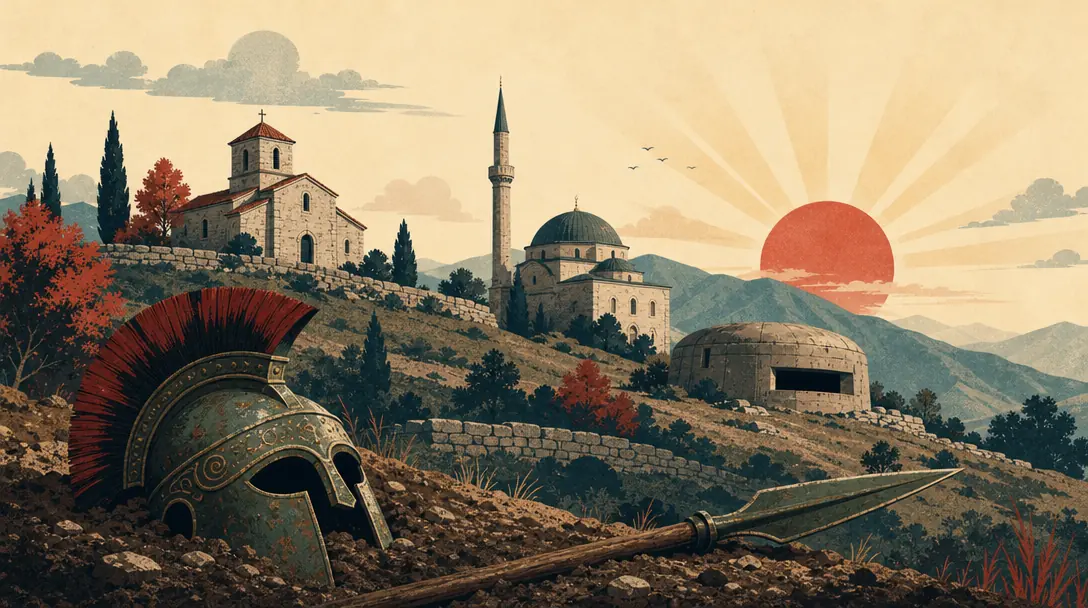
Before the 19th century, an Albanian's name almost always revealed their faith. A Catholic in the north was Gjon or Pjetër, an Orthodox Christian in the south was Vasil or Dhimitër, and a Muslim was Mehmet or Hasan. Under the Ottomans there was also crypto-Christianity: a child had a Christian name at home and a Muslim one in public.
The National Awakening (Rilindja Kombëtare) was the first movement to offer names that did not divide people by religion. The Frashëri brothers and their contemporaries revived Teuta, Agron, Genti and Bardhyl from ancient chronicles. These names became a badge of Albanian identity, shared by Catholics and Muslims alike. Skënder came into fashion at the same time.
The communist state turned this logic into official policy. A 1966 decree required Muslims to change their names to Albanian ones and ordered that newborns be given non-religious names. In 1967 the state declared Albania an atheist country and banned all religious practice. A further decree in November 1975 told citizens with "unsuitable" names to change them to "purely Albanian" ones by the end of the year. An official dictionary of recommended names (Fjalor me emra njerëzish, "Dictionary of personal names"), published in 1982, completed the picture. It listed word names, Illyrian names and ideological coinages, the best known of which is Marenglen, built from "Marx, Engels, Lenin". This is where the early-1970s statistics full of Arbens, Mimozas and Linditas come from.
That is why Muslims and Catholics in Albania share so many names. Two or three generations drew them from the same secular pool. From a name like Dritan or Besa you can no longer guess what kind of family someone grew up in.
Kosovo has its own story. In the Yugoslav years, an Albanian word name was a way of stating who you were. Parents chose Liridona, Arbnor, Dardan and Fisnik precisely because they were Albanian. In Albania, religious names returned after 1991, but Klajdi and Kejsi soon pushed them aside, followed by Noel and Amelia.
How to create a believable Albanian name for a character
A believable Albanian name pairs a first name that fits the generation and region with a surname from the same region. A Kosovar of about thirty could be Valon Krasniqi, a retired woman in Tirana Mimoza Dervishi. A newborn in Durrës is more likely to be Noel Hoxha than Besnik.
The formula is simple. The year of birth sets the layer of the first name, the region suggests the surname, and the family's religious background adds nuance. People born between the 1960s and the 1980s suit word names. Their children suit Italianised names like Ervin and Kejsi, and today's babies suit international ones. Give a northerner or a Kosovar a clan surname or one ending in -aj, and a southerner one ending in -i, taken from a trade or a village.
This is exactly where online Albanian name generators go wrong. They produce Serbian or Turkish combinations like Dragan Berisha or Mustafa Gashi, and they ignore generation. A baby called Shpresa or a seventy-year-old Mateo looks implausible. Check your character against the table:
| Character | First name | Surname | Why it works |
|---|---|---|---|
| Kosovar man, 30, Pristina | Valon | Krasniqi | 1990s name, clan surname |
| Woman, 60, Tirana | Mimoza | Dervishi | top name of the 1970s, southern surname |
| Catholic from the north, 70 | Gjergj | Lucaj | Latin-rite name, surname in -aj |
| Emigrant in Italy, 25 | Klajdi | Çela | Italianised name, common surname |
| Girl, 3, Durrës | Amelia | Hoxha | INSTAT top name, most common surname |
| Man from the south, 50 | Dhimitër | Prifti | Orthodox name, trade surname |
Frequently asked questions
What are some Albanian names for girls?
Classic Albanian girls' names include Drita (light), Besa (word of honour), Teuta (an Illyrian queen), Era (wind), Flutura (butterfly), Jehona (echo) and Shpresa (hope). Among babies born today, Amelia, Ajla and Aria top the rankings in Albania. In Kosovo, Alea, Erina and Sara are common.
Do Albanians have middle names or patronymics?
Not in the English sense. Documents list the father's first name (atësia), written as it is with no suffix, but it is never used when addressing someone. People are called by their first name, or by "Mr" or "Mrs" plus the surname.
Does an Albanian woman's surname change with gender or marriage?
The surname has the same form for men and women: the daughter of a man named Berisha is also Berisha. Which surname a woman can use after marriage is set by family law, and the rules in Albania and Kosovo are best checked separately.
What are the most common Albanian last names?
In Albania the most common surname is Hoxha, carried by tens of thousands of people. In Kosovo the most frequent are Krasniqi, Gashi, Berisha, Morina and Shala, most of which are also the names of large clans. Trade surnames such as Prifti, Shehu and Kovaçi are found across the country.
How are Albanian names different from Serbian names?
Serbian names are mostly Slavic and Orthodox (Dragan, Milica, Nikola), and surnames usually end in -ić. Albanian names include many Illyrian names and word names from Albanian vocabulary, along with Catholic, Orthodox and Muslim forms. Albanian surnames more often end in the article -i, -a or -u, or in the suffix -aj, and the overlap is mainly in international names like Sara or Noel.
Which Albanian names begin with "Al"?
Women's names include Albana, Alketa, Alba and Alma, and men's names include Alban, Altin, Albin and Alfred. Albana and Alban echo the name of the country. Altin is usually traced to the Turkish word for "gold".
Can I give my child an Albanian name in an English-speaking country?
Yes, but decide in advance whether to write the name with Albanian letters, as in Shkëlzen, or without them, as in Shkelzen. Whichever spelling you choose, keep it the same on every document.
Why do so many Albanians have Italian or English names?
In the 1990s Albania watched Italian television en masse and went to work in Italy, which gave rise to Klajdi, Ervin and Kejsi. Today's parents choose Noel, Amelia and Mateo so the name reads easily in any European country where the diaspora lives. For many families this is a practical choice that does not cancel out their attachment to tradition.
How do you address an Albanian politely: by first name or surname?
With people your own age and acquaintances it is normal to use first names and the informal "you", and this sounds natural in Albanian even at work. Older people and officials are addressed as zoti ("Mr") or zonja ("Mrs") plus the surname. To an elderly stranger in the street you can simply say zotëri ("sir") or zonjë ("madam"), with no name.