Albanian Food: Traditional Dishes, Regional Specialties and Names
Albanian food is Mediterranean-Balkan and simple: seasonal vegetables, olive oil, yoghurt, white cheese, lamb and thin-pastry pies. Start with tavë kosi, lamb baked under yoghurt.

Contents7 sections
- What Albanian food is like
- The traditional Albanian dishes to try first
- Mains and pies
- Starters and vegetables
- Albanian cuisine by region: north, south and the coast
- The north and Kosovo
- Korçë and the south
- The Riviera and the coast
- Albanian sweets and drinks
- Desserts
- What people drink
- Albanian food names and where to find them
- Ordering in Albanian: restaurant and market phrases
- FAQ
What Albanian food is like
Albanian food is Mediterranean-Balkan and simple in technique: seasonal vegetables, olive oil, yoghurt and white cheese, lamb and veal, thin-pastry pies, plus fish and mussels on the coast. The dish most often called Albania's national food is tavë kosi, lamb baked under yoghurt.
The neighbours have left clear traces on the menu:
Ottoman: byrek, baklava, Turkish coffee and the habit of lingering over a single cup;
Italian: pasta, pizza and a morning espresso drunk standing at the bar;
Greek: strongest in the south, where a salad comes with a generous slab of white cheese and a handful of olives.
These borrowed dishes became local long ago. A byrek in Tirana and a byrek in Korçë differ in pastry, filling and the way they are served.
The backbone of traditional Albanian cuisine is yoghurt, kos. People eat it with a spoon, serve it with meat and fried peppers, pour it over baked dishes and thin it with water into a salty drink. The second pillar is slow baking in clay dishes, either in the oven or over embers.
Most ingredients are local. Vegetables come from the nearest market, the white cheese is often homemade and the honey comes from a mountain village. Mint and oregano turn up in almost every dish, and mountain tea is brewed all over the country. Albanian food is not spicy: if you want hot peppers, ask and they will bring them on the side. The cooking of Kosovo and northern Albania is very close, and the two share one emblem, flija.
The traditional Albanian dishes to try first
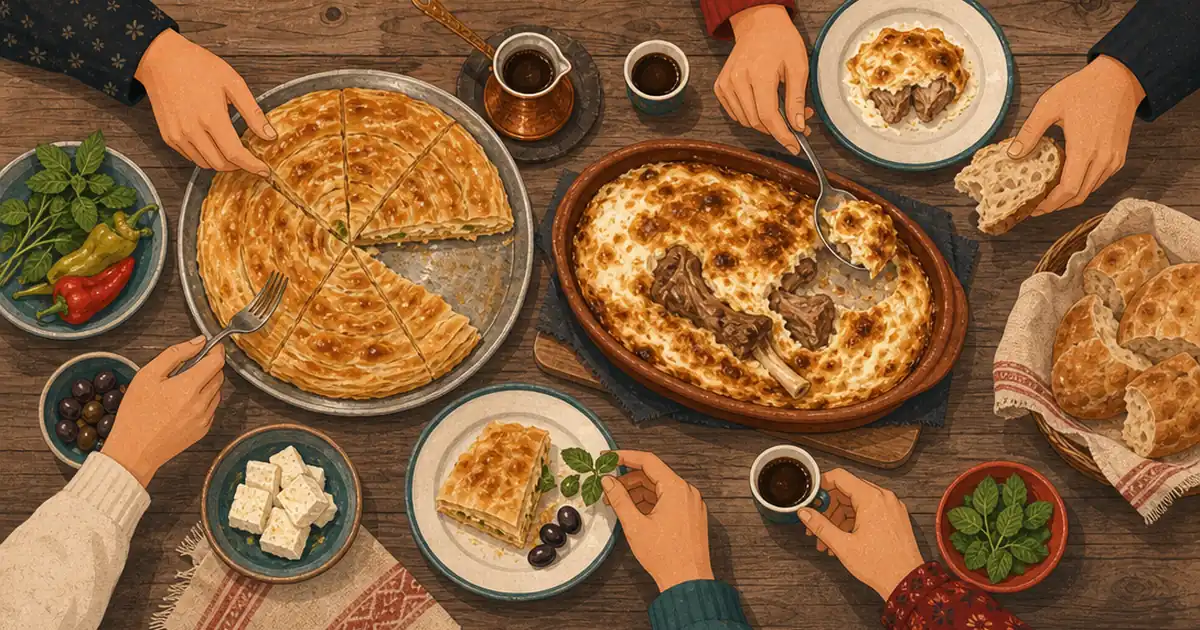
Ask any Albanian about national food and you will hear four names: tavë kosi, fërgesë, byrek and flija. Start with those, then move on to the everyday dishes: qofte, stuffed peppers, japrak and pispili, a cornmeal pie with greens.
Mains and pies
The most famous Albanian dish is lamb (less often chicken) baked with rice under a topping of yoghurt, eggs and flour. It comes from Elbasan but is served all over the country. In the oven the yoghurt sets into a soft crust while the meat underneath stays juicy. It is a heavy meat dish, and a full portion is usually lunch in itself.
Fërgesë is a thick stew of sweet peppers, tomatoes and gjizë, a salty curd cheese somewhere between cottage cheese and feta. The basic version is vegetarian, but there is also fërgesë me mëlçi, with liver. You eat it with bread, mopping up the sauce from the bottom of the clay bowl.
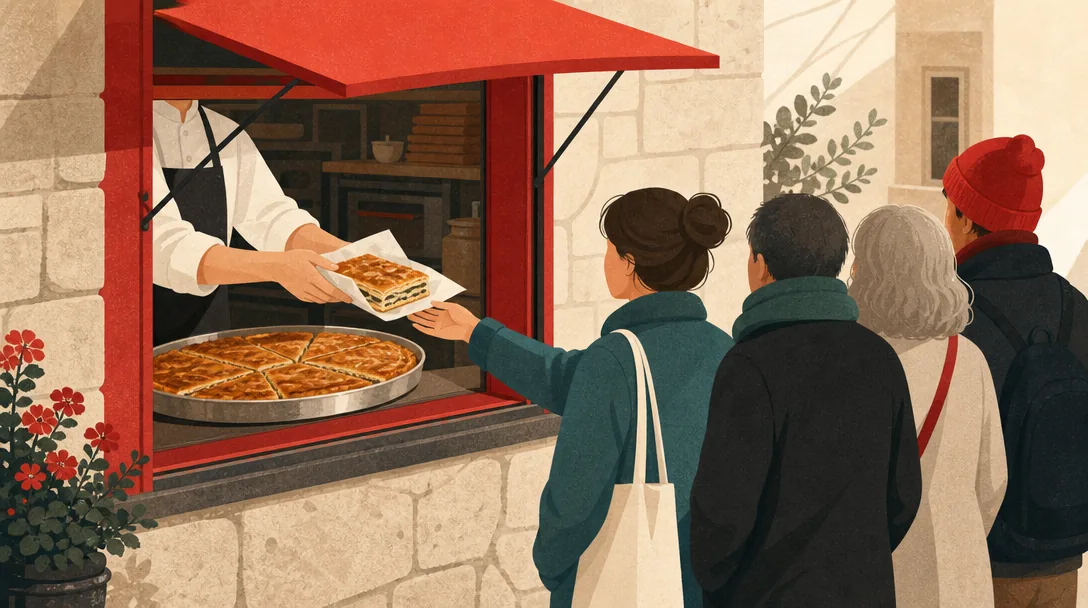
Thin sheets of pastry layered with cheese, spinach, meat and onion, or tomatoes. Albanian byrek is sold by the piece in small bakeries from early morning, wrapped in paper and handed through a window. If locals are queuing at the window, the bakery is good. With cheese or spinach, byrek suits vegetarians; with meat, everyone else.
Flija is the traditional dish of the mountains and of the festive table. A runny batter is poured in a thin layer and baked under a hot metal lid called a saç, covered with embers. The layer is then brushed with cream or clarified butter, and the next one goes on top. This goes on for several hours until a golden pie of many layers has built up. It is vegetarian and very filling, and comes with yoghurt or honey.
Starters and vegetables
Qofte are made of minced meat with herbs, shaped into small oblong sausages or balls and fried or baked. Think kofta rather than meatballs in tomato sauce: the meat is well seasoned and cooked on the grill, and the plate comes with raw onion, bread and a spoonful of yoghurt. In any zgara (grill house) this is the main meat dish.
The peppers are filled with rice, herbs and tomatoes, sometimes with minced meat, then baked and served with yoghurt. The vegetable version is more common in summer, but it is best to ask whether there is meat inside.
Rice, herbs and sometimes minced meat, rolled up in vine leaves and eaten hot or cold. There are versions with and without meat, so check when you order.
Pispili is a dense cornmeal pie with spinach, leeks, dill and soft cheese. It looks modest, but people in the south love it and bake it at home. Vegetarian.
Albanian cuisine by region: north, south and the coast
There is no single Albanian cuisine. The north and Kosovo eat hearty food built on dairy and lamb, Korçë and the south-east live on pies, above all lakror, and the Riviera around Sarandë cooks from the sea: grilled fish, octopus and mussels from the Butrint lagoon.
The north and Kosovo
Shkodër, the mountains around Valbona and Kosovo have the most substantial cooking in the region. Expect flija, thick kajmak (clotted cream), lamb, mountain cheese, honey and cornbread. Kosovo adds pasul (baked beans), sujuk sausage and kebabs.
Around Lake Shkodër, freshwater fish appears more often on the menu. In mountain guesthouses the hosts usually do the cooking themselves, and dinner at a guesthouse is the easiest way to taste northern dishes as they are made at home, without the restaurant polish.
Korçë and the south
Korçë is a city of pies, and the most important is lakror: thin pastry filled with wild greens, leeks, pumpkin or meat. It resembles byrek, but the pastry and the baking are different. Lakror is baked as a whole round pie, traditionally under a saç covered with embers.
Around Korçë people eat a lot of potatoes and beans. In Gjirokastër you will find qifqi, rice balls with egg and mint fried in oil. Outside the town they are hard to come by.
The Riviera and the coast
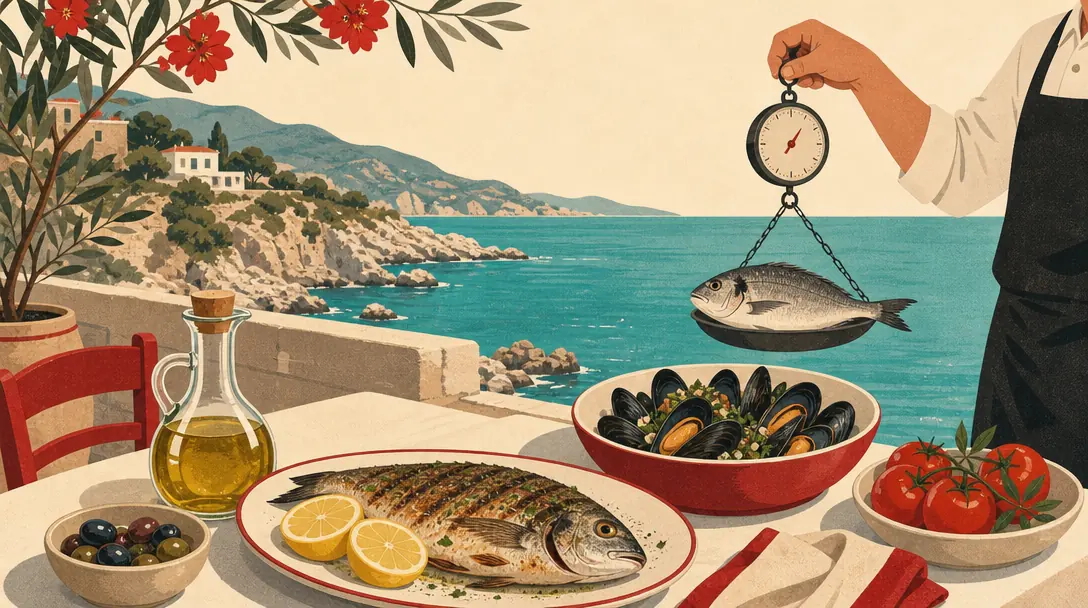
Vlorë, Himarë, Sarandë and Ksamil are fish country. Sea bass and gilthead bream are grilled whole, and octopus is stewed in olive oil.
Mussels are farmed in the Butrint lagoon near Ksamil and cooked without fuss: oil, garlic, lemon. Greek influence is most visible here, with white cheese, olives, citrus fruit and plenty of fresh herbs on the table.
Albanian sweets and drinks
The classic Albanian sweets are trileçe, bakllava and kadaif, and the classic drinks are salty dhallë, Turkish coffee and raki. Coffee is a ritual of its own: meeting "for a coffee" easily stretches to two hours, and no waiter will hint that you should give up the table.
Desserts
Trileçe is the Balkan take on Latin American tres leches cake. A sponge is soaked in a mixture of three kinds of milk and topped with caramel. It is served cold and is one of the best sellers in pastry shops.
Bakllava is layered pastry with nuts and syrup. It is baked for New Year and religious holidays and brought to the table on a huge tray. Kadaif is much the same, except that the pastry is pulled into fine strands. Then there is ballokume, crumbly cornmeal biscuits that Elbasan bakes for Summer Day, Dita e Verës, on 14 March.
What people drink
Dhallë is yoghurt thinned with water and salted. It is drunk cold with meat and byrek. In the July heat a glass of dhallë is more refreshing than any fizzy drink.
Raki is distilled from grapes, plums or mulberries. It is drunk from small glasses and poured as a sign of hospitality: in a village, a glass will appear in front of you before your host has even asked your name.
Cafés serve espresso and macchiato as well as strong Turkish coffee. For the pot-brewed kind, ask for kafe turke. Of the non-alcoholic drinks, look out for çaj mali, mountain tea made from wild herbs, brewed in the north and the south alike.
Albanian food names and where to find them
Every dish in this article appears in the table below, with its Albanian name, a short description and where to look for it. Save it on your phone before the trip and check menus against it at the table.
| Dish | What it is | Where to try it |
|---|---|---|
| Tavë kosi | Lamb with rice under yoghurt and egg | Elbasan, Tirana, traditional restaurants |
| Fërgesë | Stewed peppers, tomatoes and curd cheese | Tirana and central Albania |
| Byrek | Thin-pastry pie with cheese, spinach or meat | Byrektore (byrek bakeries) across the country |
| Flija | Layered pancake-style pie with cream | The north, Kosovo, mountain guesthouses |
| Qofte | Minced-meat sausages or meatballs cooked over embers | Zgara (grill houses) everywhere |
| Speca të mbushura | Peppers stuffed with rice | Home-style restaurants across the country |
| Japrak | Stuffed vine leaves | Home-style restaurants, especially in the south |
| Pispili | Cornmeal pie with greens | The south, village taverns |
| Lakror | Pie with greens or meat | Korçë and the south-east |
| Qifqi | Rice balls with egg and mint | Gjirokastër |
| Peshk në skarë | Whole grilled fish | Seafront fish restaurants |
| Midhje | Mussels with oil, garlic and lemon | Ksamil, Sarandë |
| Trileçe | Sponge in three kinds of milk with caramel | Pastiçeri (pastry shops) everywhere |
| Bakllava | Layered pastry with nuts and syrup | Pastry shops across the country |
| Dhallë | Salty thinned yoghurt | Byrek bakeries and grill houses, with meat and byrek |
| Kafe turke | Turkish coffee brewed in a small pot | Any café |
For pizza and pasta, look for a piceri (pizzeria); even small towns have one. One evening with the rules of the Albanian alphabet is enough to read signs like these on your own. The letters ë, ç, dh, ll and q sound nothing like what an English reader would guess, but there are almost no exceptions.
Ordering in Albanian: restaurant and market phrases
Ten phrases are enough to order, pay and compliment the cook. Albanians are genuinely pleased when a visitor tries even a few words of their language, and there is no need to feel shy about your accent: effort counts for more than perfect pronunciation.
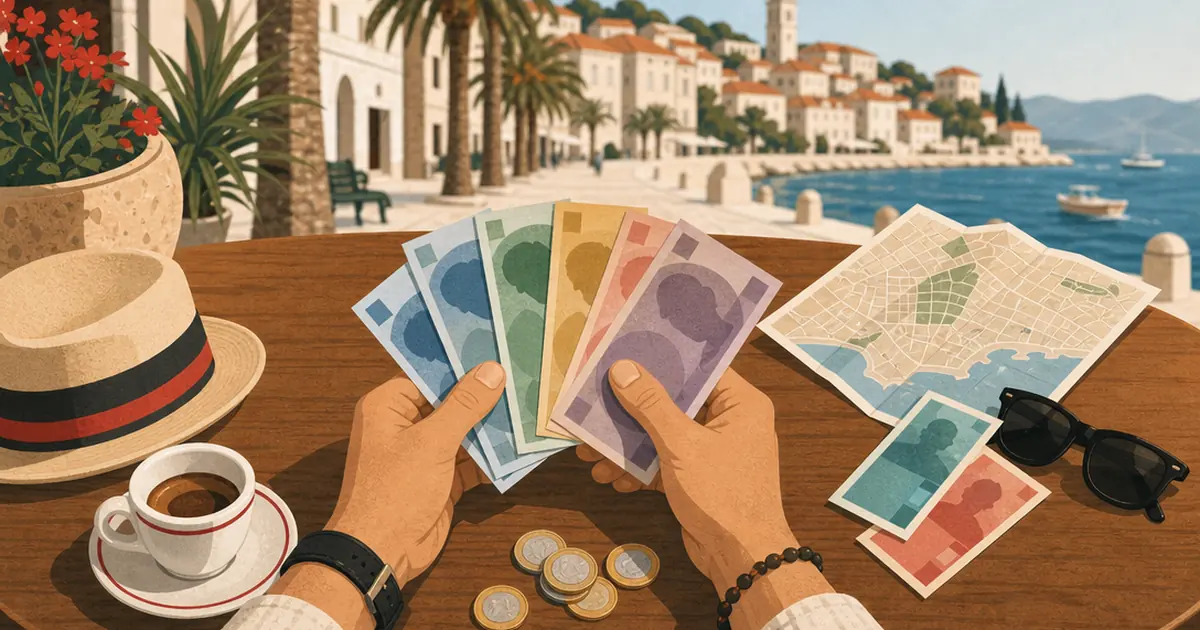
Menu prices are in lek, and at first they are easy to misread: many people still quote amounts in "old" lek, with an extra zero. Before your first restaurant visit, it helps to read how the Albanian lek works. For taxis and shops, there is a separate set of useful phrases, also with audio.
Dish names are easier to learn in advance with flashcards, where every food and grocery word is voiced by a native speaker. By your first dinner in Albania, the menu will no longer look like a code.
Frequently asked questions
What is the most famous food in Albania?
The dish most often named as Albania's national food is tavë kosi, lamb baked with rice under yoghurt and eggs, which comes from Elbasan. In the north and in Kosovo, flija would be a strong contender, and in Tirana people will offer you fërgesë first. If you only try one dish, make it tavë kosi, because it is served all over the country.
Is Albanian food spicy?
On the whole, no: Albanian food is mild, and its flavour comes from herbs, olive oil, yoghurt and garlic. Hot peppers, fresh or pickled, arrive on the side if you ask. Most of the menu suits children, and people with a sensitive stomach only need to go easy on fatty meat and cream.
What can vegetarians eat in Albania?
Quite a lot: byrek with cheese or spinach, flija, meat-free fërgesë, pispili, lakror with greens, stuffed peppers and japrak with rice, roasted vegetables, salads with white cheese and olives, and baked beans. The sweets are vegetarian too. Check fillings with the words pa mish, because peppers, japrak and even beans can contain meat.
What Albanian food can I bring home?
Olive oil and olives, mountain tea, honey, raki in a sealed bottle, dried oregano and other herbs, and boxed baklava or kadaif all travel well, as do homemade preserves and fig jam. Meat and dairy, cheese included, are better left behind: the EU does not allow travellers arriving from outside the bloc, Albania included, to bring in meat or dairy products for personal use. Wherever you are heading, check the rules before you fly, and summer heat is hard on cheese anyway.
Should you tip in an Albanian restaurant?
Tipping is customary but not compulsory: people usually round up the bill or leave around 5–10% if they liked the service. Leave it in cash on the table or hand it to the waiter. In cafés, people often just leave the small change from a coffee.
What fruit grows in Albania, and when is it in season?
Late spring and early summer bring the first strawberries and cherries, June and July are apricot and peach season, and August is the peak, with watermelons, melons, grapes and figs. Autumn brings pomegranates, persimmons and olives, and in winter the markets are full of mandarins and oranges from the south. The best places to buy are morning markets and farmers selling by the roadside.
How is Kosovo food different from Albanian food?
The base is shared: flija, byrek, qofte, yoghurt, raki and coffee. In Kosovo, Turkish and wider Balkan influence is stronger, with more beans, kajmak, sujuk, kebabs and meat in general, and little fish or seafood, since the country has no coast. Sweets and the coffee ritual are almost identical in Prishtina and Tirana.